 |
| David, I apologize for this rant in advance |
David Byrne, former frontman of the Talking Heads and indisputable genius in his own right, wrote an op-ed in the UK paper "The Guardian" a couple of weeks ago. In it, he decried the internet streaming service Spotify. Byrne makes a number of claims in his piece. He argues that Spoitfy and services like it will eventually own the entire market, and that digital streaming will supplant record sales. He goes on to speculate that while established acts like his own will survive, up and coming acts will be squeezed out of the market. His opinion reflects that of many others, including Radiohead frontman Thom Yorke.
 |
| Destroyer of worlds. Or at least the arts, apparently. |
Now, I love David Byrne. He's probably my favorite artist recording music today. So it is with the utmost respect that I insist that, while some of Byrne's points are valid ones, most of what he's saying here is simply not accurate.
First, I should acknowledge that Byrne isn't entirely in the wrong here. Spotify royalties to the artists are a pittance. He correctly points out at one point that an artist would need to have his music streamed over 230,000,000 times just to make an even $15,000, minimum wage salary. There's some validity to that criticism. I, for one, would gladly accept an increase in Spotify's monthly fee if meant that artists received more money for their work.
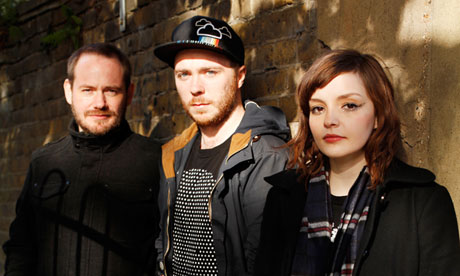
And I'm not alone in that, which is precisely the problem with his logic. Byrne, and others like him who have railed against the digital music revolution, fundamentally misunderstand their own fanbase. The assumption fans would rather take music for free than pay artists for it is one that flies in the face of a number of success stories that the internet has produced. The Scottish electronic band Chvrches released their debut hit "Lies" for free on the Neon Gold blog, and saw explosive popularity thereafter. When they released their debut album, they streamed it for free on NPR, a number of music sites and Spotify, and the record still sold a chart topping 16,000 copies it's first week. People bought it because they liked their music and wanted to support the artist. Despite the fact that the music was widely available for free, people bought it anyway simply because they wanted to own it for themselves.
 |
| The picture of "internet success" |
Take this argument to its logical extreme, and you find Kickstarter. Dozens of artists have used the site as a launch point for albums. And while it's mostly going to local, "small time" acts, there are also groups like Toad the Wet Sprocket, who just raised $260,000 on a $50,000 goal to cover the production costs of a new record. In other words, the group's fans wanted new music from them so badly that they laid down five times the money that was asked of them for a record that didn't even exist yet. And the real kicker is that those who donated are still going to buy the finished product, despite the fact that they funded its very existence. In any other business venture, such an investment ahead of the product would warrant the sharing of profits among the investors. But fans of music, games, film and other Kickstarter ventures invest that money simply because they want a chance to purchase the product.
I'm generally loathe to throw out anecdotal evidence to make a case. But these individual stories represent a broader trend. Primarily on the backs of digital media outlets like Amazon and Itunes, the music industry last year saw its first increase in record sales since 1999. And on top of that, there was a decrease in piracy. Granted, $16 billion is a far cry from the industry's $28 billion high, but the increase is a reflection in modern trends that defies the argument of digital deniers: despite an explosion in free or cheap online streaming resources and an abundance of illegal options, more people are buying music than they did last year. Spotify itself, which has 6 million paying customers as of May, is a testament to the fact that. Despite having free services like Youtube at their disposal, fans are more than happy to fork over money for the music they love.
Perhaps even more baffling than artists like Byrne blaming fans for not supporting the music, is that they're making Spotify out to be the culprit at all. Spotify is not the reason artists barely receive any pay for the songs they play. The company has already doled out over 70% of its revenue for royalties alone. No, they're not the bad guy here; it's with the labels that they're paying the royalties out to. Just as they did with radio royalties before, labels take the lion's share of the money fronted by Spotify (which, for the record, is to the tune of a half billion dollars), and then give a pittance of that back to the artists themselves. The problem that exists in the current music market is the problem that's always existed: labels are an outdated form of distribution. It's not the fans who robbed David Byrne, and it's not even Spotify. It's the same middleman that has artificially inflated the price of music for decades. That these artists can't see that is strange, considering how long it's gone on.
 |
| Y'know...guys like this |
It has been high time for a long time that the old model of music distribution was abandoned. Record labels for years have been in the business of exploiting both consumers and artists. Byrne, of all people, should know that. Ironically, by pulling out of Spotify and other services like it, artists are cutting off what may well be the best hope for a change in the industry. And it's the emerging artists that Byrne fears for that have the most to gain from that transition. The great contribution of the internet to the arts has been the way that digitization has broken down the barriers between content creators and their consumers. And with all due respect to Mr. Byrne, that anyone would try to destroy that newborn intimacy shocks me. Change is coming, whether those used to the old business model like it or not. And I for one welcome it.
